


 Tutor Intelligence
 Andreessen Horowitz
2026-11-03 · Ian Lapham
Tutor Intelligence Rents Out Robots for $14 to $18 an Hour. Its CEO Says Most of the Cost Is Running Them, Not Building Them.
Tutor Intelligence raised $75 million on November 2 to build more of the robots that factories and warehouses pay for like hourly labor, with no purchase and no long-term contract. The price works because remote human operators step in when a robot gets stuck, and the company's chief executive says ongoing costs such as those operators, computing and maintenance now outweigh the cost of the machine. The new money is a bet that those running costs fall faster than the fleet grows.
Tutor Intelligence, a Watertown, Massachusetts robot maker spun out of MIT, said on November 2 that it raised $75 million in a Series B round led by Andreessen Horowitz, bringing its total funding to $117 million (Business Wire). Tutor doesn't really sell robots. It sells their work, "by the hour or by the pick," with no upfront purchase and no long-term contract. Its palletizing robot, Cassie, is listed at $14 to $18 per robot-hour (Tutor pricing). The company says it is on track to have more than 1,000 robots under contract by the end of 2027, all built in and deployed from the United States.
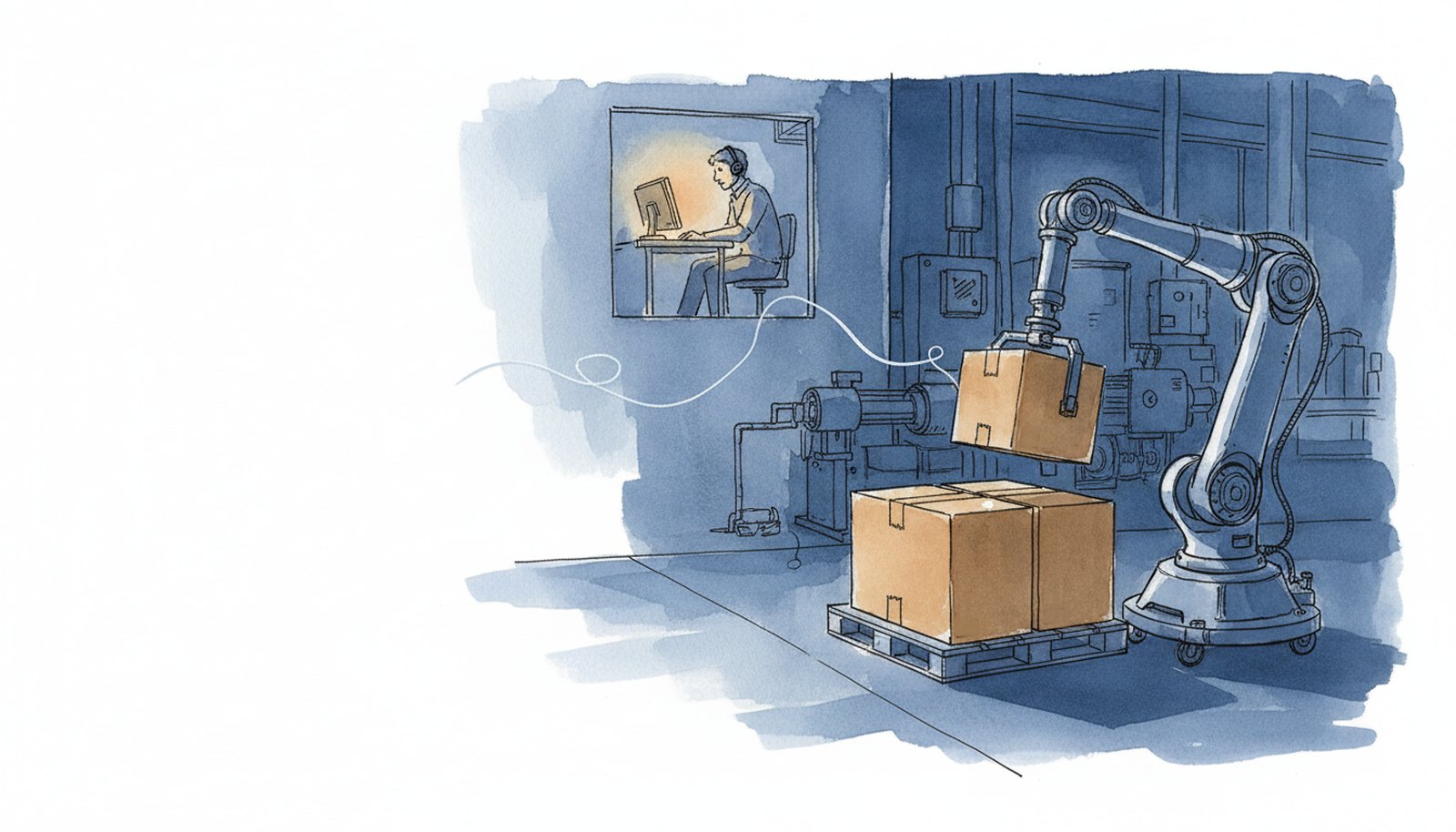
Our view: Tutor is selling labor, and the people standing behind each robot are both part of what customers pay for and the largest part of what it costs Tutor to deliver. When a robot hits a task it can't handle, a remote operator, which the company calls a tutor, takes over and gets it moving again, and that session becomes training data. Asked on a16z's podcast whether his costs sit in the hardware or in running the fleet, chief executive Josh Gruenstein said: "it is more ongoing at this point" (a16z podcast). So the $75 million is mostly a bet that software can take over more of the work those humans do, and do it faster than the fleet grows.
What a customer actually pays
The pricing page is unusually specific for an industrial robot company. Palletizing and depalletizing cost $14 to $18 per robot-hour, with a minimum of 80 hours a month. Case picking is priced per pick, which Tutor says it sets at 10% to 50% below what a pick costs the customer today. The one-time list is short: a flat $10,000 implementation fee, $1,000 to $3,500 for freight from Watertown, a refundable $8,000 security deposit and $50 to $300 per line for readiness parts. Terms are month to month. Tutor says the median time from signing to a robot in production is about forty days (Tutor pricing).
Run the numbers and the entry price is small for automation. The monthly minimum works out to $1,120 to $1,440. One robot working a single eight-hour shift, five days a week, runs about 173 hours a month, or roughly $2,400 to $3,100 (arithmetic). Getting started costs $11,000 to $13,500 in implementation and freight that don't come back, before readiness parts and the refundable deposit (arithmetic). Gruenstein said the opening sales line skips the technology entirely: "Hey, have you ever considered a robot for 16 bucks an hour?"
A customer can buy a Cassie outright, with an annual service plan, but Tutor's own pricing page steers buyers away from that and says usage pricing "keeps the risk with us." That is the right description. Tutor carries the hardware, the repairs and the humans.
Where the cost sits
Andreessen Horowitz, in its note on the deal, described the method plainly. Tutor deploys "ahead of full autonomy, using human teleoperators" and that, early on, its remote operators were skilled enough that customers could not tell their work from that of employees (a16z). Gruenstein has said the company's first paid pilot, at a perfume company in New Jersey, was "0% autonomous. It was 100% remote-controlled" (Automated Warehouse).
The robots are far more autonomous now. Tutor says Cassie runs its 200 million parameter Turing model and has made millions of picks in production. But the humans haven't left. The Robot Report noted on Monday that the robots are built in the U.S. while "the tutors may be overseas" (The Robot Report). In May the same publication reported 45 to 50 tutors in Mexico and the Philippines supervising the company's 100-robot data collection facility in the Boston area (The Robot Report).
On the podcast, Gruenstein treated the human share as a cost decision, not a goal. Asked whether the aim is to have no tutors, he compared it to the cost of serving a model on a GPU, then put it as "how much engineering do you have to do to get that last nine out of your models versus using tutors." When one of the hosts suggested the hardest 10% of tasks might need a person for a long time, Gruenstein said that might be acceptable "on the economics."
That is an honest answer, and it changes how the business should be judged. A traditional robot is a large purchase with cheap running costs, paid back over years. Tutor flips that. Gruenstein said "more and more of the cost is going into ongoing inference teleoperation," and the company also pays for maintenance and swaps broken robots rather than fixing them on the customer's floor. Every hour a person in another country spends guiding a robot is an hour Tutor bills at $14 to $18 and pays for twice, once in hardware and once in labor.
How fast the fleet is growing
Tutor hasn't said how many robots it runs today. In October it wrote that its fleet "is growing 20% month over month" (Tutor). On Monday it told The Robot Report it has twice as many robots working as a year ago, across almost four times as many facilities.
Those two figures describe different speeds. Doubling in a year averages about 6% a month. Twenty percent a month, held for a year, would be close to nine times (arithmetic). The likeliest reading is that growth picked up recently, and the company is also adding more sites with fewer robots each, which fits a model built on starting customers with one machine. Nearly a third of organizations that received Tutor robots in the past 12 months were existing customers adding more, the company said.
Objections
"Remote operators are a crutch. Real robot companies don't need them." Most companies building robot software rely on human demonstrations somewhere. Tutor's difference is that it bills for the hours while it collects them, so the training data is paid for by customers. The risk is what happens to margins if the share of human help stops falling.
"$14 to $18 an hour is cheaper than a person, so it sells itself." Possibly, though a robot-hour and a worker-hour aren't the same unit. Tutor says Cassie moves up to 14 cases a minute. The 80-hour minimum and the fees matter more for a small plant than for a large distribution center.
"Usage pricing is just robots-as-a-service with a new name." Tutor argues the difference is the lack of a long contract. That cuts both ways. A customer can leave any month, so Tutor carries the risk that a robot sits idle after it has been built and shipped.
Three things to check
- The hourly rate over time. If Tutor's models are taking over work from human operators, the company can hold the $14 to $18 price and widen its margin, or cut the price to win more plants. A falling list price would be a sign the running costs are coming down.
- Any disclosure of the human share. Tutor has not published how many hours its robots run without help or how many tutors support the fleet. That figure, more than the robot count, tells you whether the model gets cheaper with scale.
- The 1,000-robot target and Sonny. Tutor says it will have more than 1,000 robots under contract by the end of 2027. Watch how many of them are Sonny, its two-armed robot for picking individual items in e-commerce warehouses, which faces harder tasks than stacking boxes and will lean more on remote operators at first.